
Why Most AI in Workplace Finance Doesn’t Work

Most workplace AI assistants are just search bars with a fancy name — and in personal finance, that’s not enough. This white paper from Marc McDonough, CEO of TIFIN @Work, explores why most AI in workplace finance fails to deliver real value, and how AI agents and knowledge graphs can create truly personalized, actionable guidance.
Why Many Sales Teams Don’t Trust AI Intelligence Tools – and How to Fix It

Many sales teams don’t trust AI tools—and adoption lags. TIFIN AMP solves this with transparent design, CRM integration, and actionable insights, driving adoption rates near 98%.
Redefining What It Means to Invest and Give

A $90 trillion wealth transfer is reshaping how money moves between generations. Younger investors aren’t just inheriting assets—they’re redefining wealth with values-aligned investing and strategic philanthropy. For advisors, this creates an opportunity to engage clients through giving, deepen relationships, and drive growth.
The “Innovation at Speed” Mindset in Financial Services

In financial services, slow experimentation is no longer an option. With AI evolving at a compounding pace, firms must adopt an “innovation at speed” mindset—rapidly deploying solutions, iterating with clients, and executing with velocity to stay competitive in today’s fast-changing landscape.
Why Advisor-Led Alts Growth Starts at the Enterprise Level

Alternatives now represent nearly 15% of global AUM and over 40% of industry revenues. Yet many advisors still face barriers to adoption. The real bottlenecks sit upstream at the enterprise level, where centralized research, compliance, and technology support make or break advisor-led growth.
Build, Buy, or Partner: Navigating the Crossroads of Scalable Personalization

Building is slow, buying is shallow. Partnering with Sage flips the script—turning personalization into scale with faster coverage, less prep, and more meaningful touchpoints.
Podcast: AI-Powered Growth Across Wealth and Asset Management
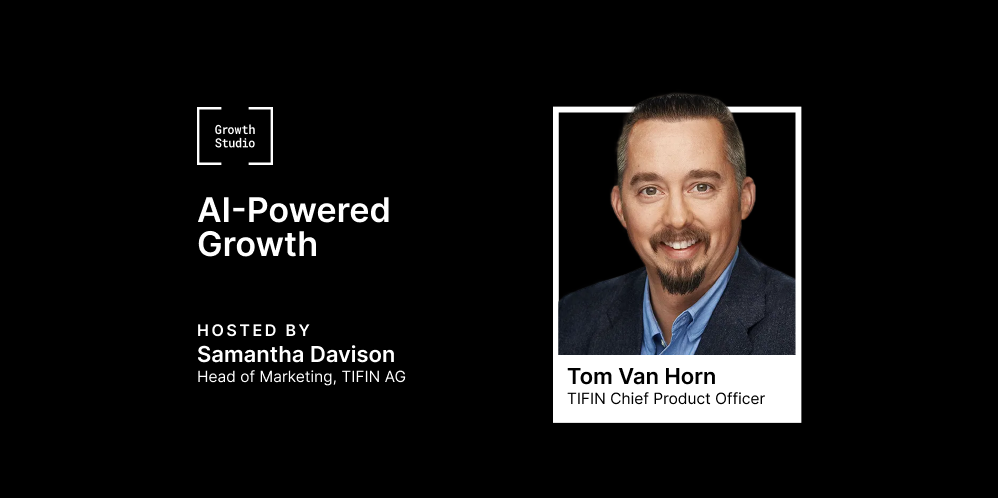
AI is transforming wealth and asset management. In this Growth Studio episode, TIFIN’s Tom Van Horn shares how firms use AI to drive growth, acquisition, and scalable impact.
From Passive to Purposeful: Customizing Your DAF Investment Policy

DAFs are no longer just passive giving vehicles. With a custom Investment Policy Statement, families can align charitable capital with their mission, values, and long-term goals—turning philanthropy into both impact and growth.
Inside Helix: A Conversation on Solving the Private Markets Puzzle

Private markets promise growth but remain complex. In this conversation, TIFIN’s Rob Pettman and Helix COO Steve Snyder discuss how AI-powered tools can streamline due diligence, enhance advisor enablement, and unlock scalable access to alternatives.
Trust: The Most Overlooked Factor in AI Adoption

AI in wealth management won’t succeed on capability alone—it depends on trust. From clients to advisors to firms, adoption hinges on transparency, security, and alignment. Firms that embed trust into their AI strategies are already outpacing peers in growth and efficiency.